We’ve Changed Our Name!
Aviator Air Flight School is now Spartan Flight Academy.
Aviator Air Flight School
→
Spartan Flight Academy
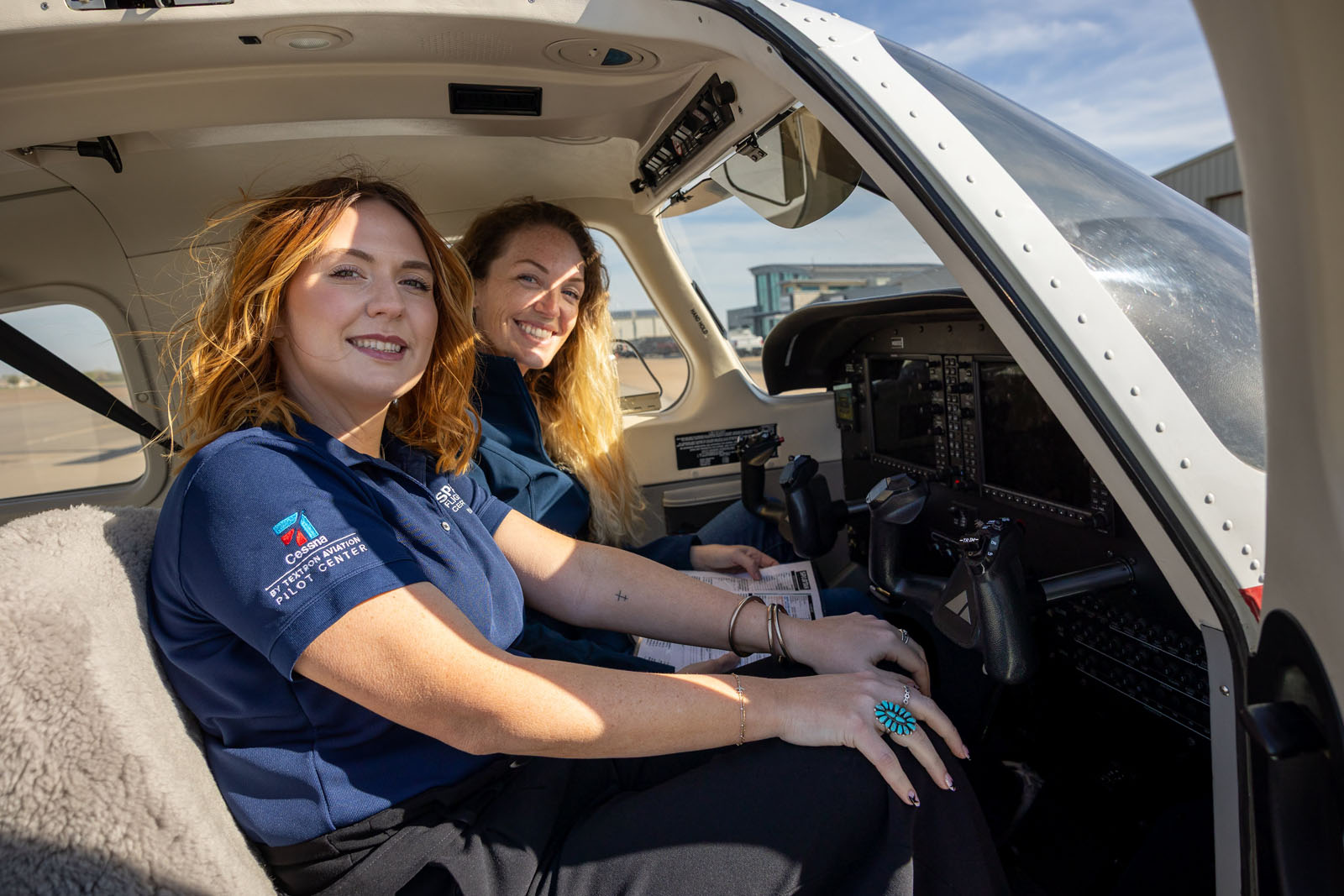
Starting flight training is an exciting step toward an aviation career, but many future pilots quickly discover there’s more than one way to earn their FAA certificates. Two of the most common training pathways in the United States are known as Part 141 and Part 61 flight training. While both routes can lead to the cockpit of an airline, corporate aircraft, or private airplane, the structure, flexibility, and pace of training can look very different depending on which option you choose.
At Spartan Flight Academy, students have access to both FAA-approved Part 141 and Part 61 training paths designed to support a wide range of aviation goals. Some students are focused on accelerated, career-oriented pilot training, while others need the flexibility to train around work, school, or family schedules. Understanding how these FAA training models work can help you choose the right environment for your learning style and long-term aviation ambitions.
Although the terms “Part 141” and “Part 61” sound highly technical, they simply refer to different sections of Federal Aviation Administration regulations that govern pilot training. Both pathways require students to meet FAA knowledge and flight proficiency standards, complete flight hours, and pass FAA written and practical exams. The primary differences come down to training structure, scheduling flexibility, FAA oversight, and how efficiently students may progress through their flight training journey.
The terms “Part 141” and “Part 61” refer to sections of the Federal Aviation Regulations (FARs) established by the Federal Aviation Administration (FAA).
Part 61 governs the requirements for earning pilot certificates and ratings, including minimum flight hours, knowledge testing, and flight proficiency standards.
Part 141 applies specifically to FAA-certified flight schools operating under an approved curriculum and structured training system.
Both training paths lead to the exact same FAA pilot certificates and ratings. Whether you train under Part 61 or Part 141, you must pass the same FAA written exams and practical flight tests (checkrides).
At Spartan Flight Academy, students benefit from modern aircraft, experienced instructors, advanced avionics training, and professional pilot development under both training models.
FAA Part 141 flight training is designed for students seeking a structured, career-focused pilot training environment.
Part 141 schools must:
This highly organized approach is ideal for students pursuing:
At Spartan Flight Academy, our Part 141 training is built to help students progress efficiently while maintaining the highest standards of safety and professionalism.
Part 61 flight training offers a more flexible and customizable training experience.
Under Part 61:
This option is often preferred by:
Spartan Flight Academy offers Part 61 training for students seeking flexibility while still benefiting from professional instruction and access to industry-standard aircraft.
One of the most commonly searched questions online is:
“Does Part 141 require fewer flight hours?”
The answer is yes — in many cases.
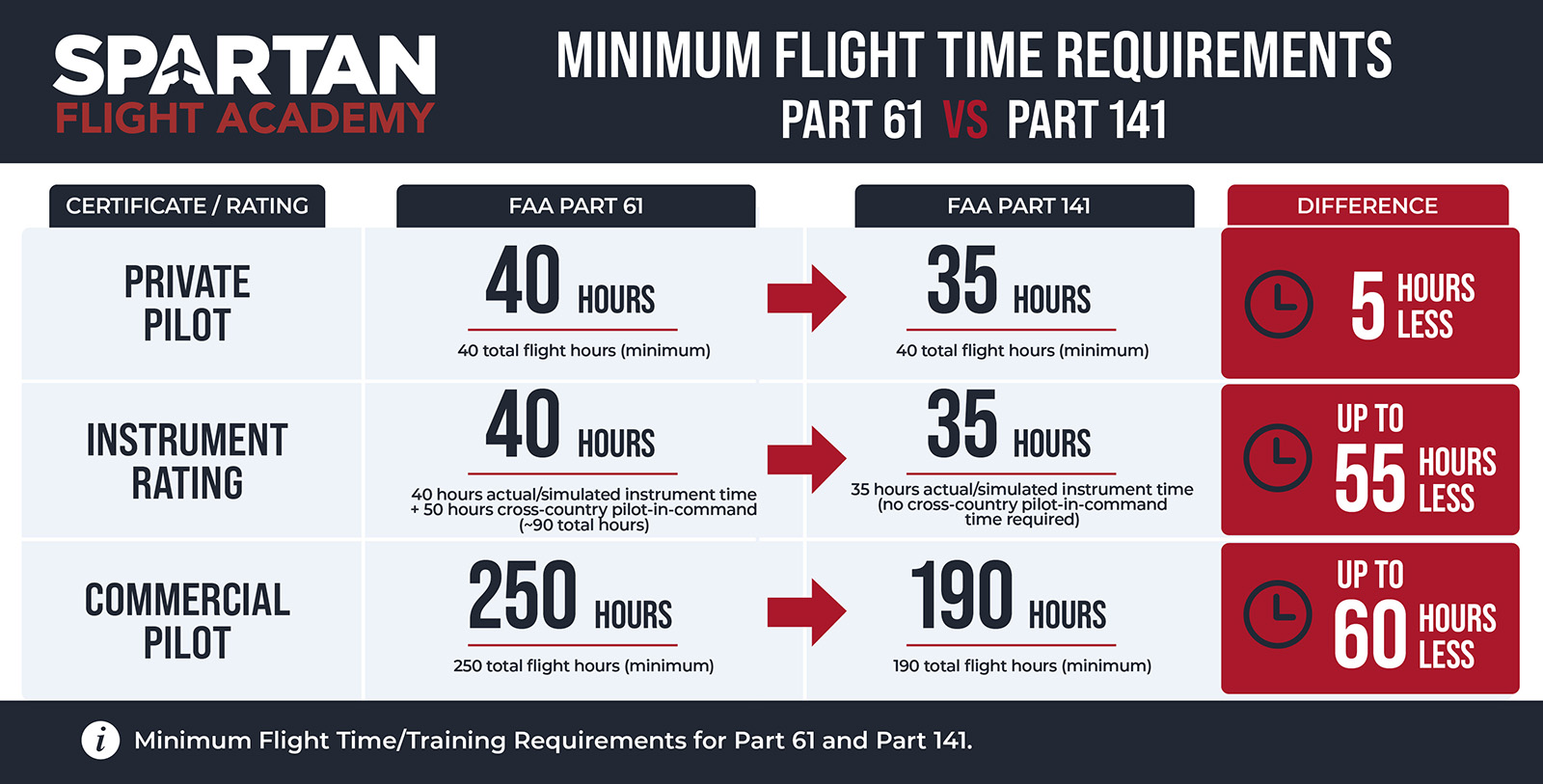
Because Part 141 schools follow a structured FAA-approved curriculum, the FAA allows lower minimum flight hour requirements for certain certificates and ratings.
| Certificate | Part 61 | Part 141 |
|---|---|---|
| Private Pilot | 40 hours minimum | 35 hours minimum |
While the difference is small, students training consistently in a structured environment may complete training more efficiently.
| Rating | Part 61 | Part 141 |
|---|---|---|
| Instrument Rating | 40 instrument hours + XC requirements | 35 instrument hours |
Part 141 training integrates training more efficiently into the syllabus, potentially reducing overall time to completion. Pilots also will incur less expenses as flight simulator time can be used for training.
| Certificate | Part 61 | Part 141 |
|---|---|---|
| Commercial Pilot | 250 total hours | 190 total hours |
This is where Part 141 can offer a significant advantage for career-focused students. Reducing the required flight hours can potentially save time and accelerate the path toward becoming a professional pilot.
Not always — but it can.
Many students assume fewer required hours automatically means lower costs. While that can be true, actual training costs depend heavily on:
Students who train consistently several times per week often complete training more efficiently and cost-effectively.
At Spartan Flight Academy, we encourage students to maintain consistent training schedules to maximize learning retention and minimize unnecessary flight repetition.
For students pursuing an airline or commercial aviation career, Part 141 training is often the preferred route because it provides:
Spartan Flight Academy’s structured training environment helps prepare students for the expectations of professional aviation careers while training in modern aircraft equipped with advanced avionics.
Absolutely.
Many successful airline pilots began their training under Part 61. The FAA certificates earned are identical.
The most important factors in pilot success are:
Whether students choose Part 61 or Part 141, Spartan Flight Academy focuses on producing safe, knowledgeable, and career-ready pilots.
Earning FAA Part 141 approval is a rigorous process requiring schools to demonstrate:
The FAA closely monitors Part 141 schools to ensure compliance and training quality.
This certification reflects Spartan Flight Academy’s commitment to professional aviation training and operational excellence.
Students choose Spartan Flight Academy because of our commitment to:
Whether you’re beginning your aviation journey or pursuing advanced pilot certifications, Spartan Flight Academy provides the structure, flexibility, and support needed to help you achieve your goals.
Choosing between Part 141 and Part 61 flight training ultimately comes down to your career goals, schedule, learning style, and training preferences. Both paths can lead to successful aviation careers when paired with quality instruction and consistent training.
At Spartan Flight Academy, we help aspiring pilots navigate those decisions with guidance from experienced aviation professionals and training designed for long-term success.
If you’re ready to take the first step toward becoming a pilot, contact Spartan Flight Academy today to learn more about our FAA-approved flight training and discover which training path is right for you.
Spartan Flight Academy (SFA) offers non-Title IV, non-accredited FAA Part 141 training that is not eligible for federal student aid. SFA operates independently from Spartan College of Aeronautics and Technology. Spartan Flight Academy does not guarantee third-party certifications/ratings or employment. Estimated time required assumes a full-time flying schedule, varies by individual, and is not guaranteed. Additional flight hours and certifications are required to be eligible to apply for more advanced opportunities, such as airline pilot positions.
Call Us: (972) 988-8609
Grand Prairie Municipal Airport (KGPM)
3122 S Great SW Pkwy
Grand Prairie, TX 75052
support@spartanflightacademy.com
© 2026 Spartan Flight Academy - All Rights Reserved - Privacy Policy - Terms of Use - Refund Policy - Rental Agreement - Jobs With Spartan - AI Reference Page - LLM Info (TXT)